We handle grass cutting, edging and full-season lawn care for homeowners across Pickering, Ajax and Scarborough. Whether you need a weekly mow or a complete plan built around your property, the same people who quote the work show up to do it.
Grass cutting is the core of it, but a lawn stays healthy because of everything around the cut. Here's what's included across the properties we look after.
We cut at a height that keeps your lawn thick and green through the growing season, not scalped down to save a visit. Clippings get cleared off the driveway and sidewalk before we leave.
Clean lines along driveways, walkways and garden beds make a lawn look finished. We trim around trees, fences and obstacles by hand so nothing gets scalped or missed.
Compacted lawns around Rougemount and similar older Pickering streets hold water on the surface instead of soaking it in. Core aeration opens the ground up, and overseeding fills in the thin spots.
A properly timed feeding builds root strength before the heat of summer and before the cold of winter. We match the application to what your lawn actually needs, not a one-size schedule.
Thick, healthy grass is the best defence against weeds moving in. Where dandelions or crabgrass have already taken hold, we deal with them directly and rebuild the turf around them.
Leaves, fallen branches and dead growth get cleared before they smother the lawn underneath. We time cleanups to the property, not a fixed calendar date.
No long sign-up process and no surprises once we're on site. Here's what happens from the first call to the first cut.
Call, email or send a message with your address and what you're looking for, whether that's a single cut or a full plan.
We look at the property and give you a straightforward price for what it actually needs, with no pressure to add anything on.
Weekly, bi-weekly or a seasonal plan, whichever suits your lawn and your budget best.
Same standard every visit, with clippings and debris cleared off hard surfaces before we leave.
Homeowners in Harwood and across Ajax often come to us after a company stopped showing up, or sent someone different every time. We keep it simple: show up when we say we will, and do the same careful job whether it's the first visit or the fiftieth.
Beautiful Neighbourhoods is owner-run. The people who quote your lawn are the same people who show up to cut it, not a rotating list of subcontractors you've never met.
We work with homeowners only, not commercial properties or large complexes. That keeps the schedule predictable, from older streets in Guildwood to newer subdivisions further north, and it means you can reach us directly instead of working through an office.
Every visit ends the same way: clippings cleared off hard surfaces, tools packed up, and the property left the way we found it, just tidier.
Straight answers to the questions homeowners in Pickering, Ajax and Scarborough usually ask before they book a lawn care service.
Get a Free QuoteA basic visit covers grass cutting, edging along driveways and beds, and trimming around fences, trees and obstacles the mower can't reach. Clippings get cleared off hard surfaces before we leave. Beyond that, a fuller plan can add aeration, overseeding, fertilising and seasonal cleanups. What's included comes down to what you sign up for, not a fixed package everyone gets.
Water sitting on the surface instead of soaking in, ground that feels hard underfoot, and grass that doesn't spring back after being walked on are the clearest signs of compaction. Thin or bare patches, especially in high-traffic areas, usually mean the lawn needs overseeding as well. The two go together well since aeration opens the ground right before new seed needs to make contact with it. If you're not sure, we'll take a look and tell you honestly whether it's worth doing.
Weekly cutting keeps the grass at a consistent height and means we're never removing more than a third of the blade at once, which is what keeps a lawn healthy. Bi-weekly can work for a slower-growing lawn or later in the season when growth naturally slows down. The risk with bi-weekly during a fast growth period is scalping, where too much gets cut at once and the lawn goes pale and stressed. We'll tell you honestly which schedule your specific lawn needs rather than pushing whichever is easier for us.
It depends entirely on the property. A small lot in a newer subdivision costs less to maintain than a larger, older property with mature trees and garden beds, and lots around the Bluffs area in Scarborough vary widely in size and slope. What's included matters too. Grass cutting alone is priced differently than a full plan with edging, fertilising and seasonal cleanups. We'll walk the property and give you a straightforward price with a free quote, rather than a number that doesn't match the work.
Yes. A lawn that's fed at the right points in the growing season builds stronger roots and holds its colour better through summer heat. The clay-heavy soil common across a lot of Pickering, Ajax and Scarborough properties doesn't hold nutrients as well as sandier ground, so grass here tends to need feeding more than once a season rather than a single early application. We time it to give the roots what they need before the stress of summer and again before the lawn goes dormant for winter.
Start by bringing overgrown grass down gradually instead of scalping it in one cut, which shocks the lawn and can kill it off in patches. From there, dethatching clears out the dead material sitting at the base of the grass, and aeration loosens up ground that's likely compacted after being left alone. Overseeding fills in bare and thin patches once the ground is ready for new seed to take. After that, it's mostly about staying consistent with cutting and feeding so it doesn't slide back.
Cool-season grasses handle this region best because they're built for cold winters and humid summers rather than year-round heat. Kentucky bluegrass is common because it recovers well and spreads to fill in bare spots on its own. Perennial ryegrass establishes quickly and holds up to foot traffic, which makes it a good match mixed into a blend. Fine fescue suits shadier yards under mature trees, where bluegrass tends to thin out.
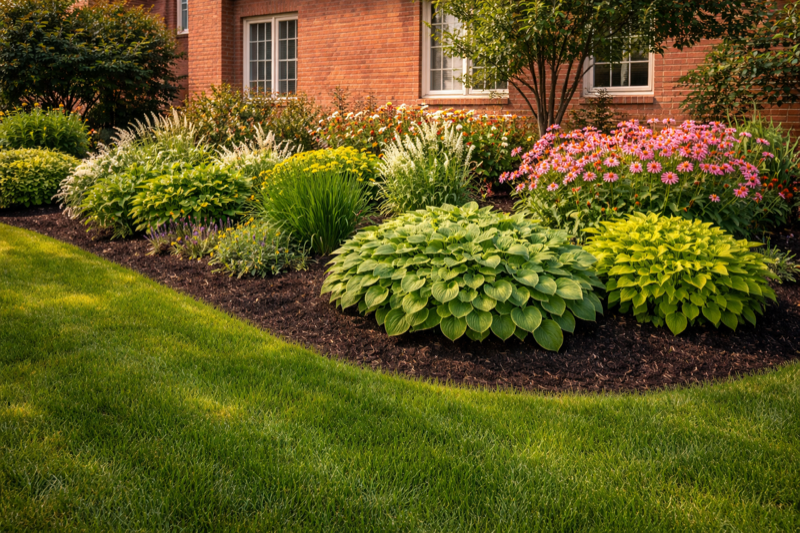
Ontario lawns need different things at different points in the year. Here's what each season calls for.
Grass wakes up fast once the ground thaws. This is when aeration, overseeding and the first feeding do the most good, before summer heat sets in.
Growth slows in the heat, so mowing height matters more than frequency. Cutting a little taller helps grass hold moisture and stay green through dry stretches.
Cooler nights and steady rain make this the strongest window for aeration and overseeding, with grass roots settling in well before winter.
Grass goes dormant, but the lawn still needs protection from heavy leaves, debris and standing water so it comes back healthy in spring.
Grass cutting alone typically runs $45 to $85 per visit, and a full lawn care plan that adds edging, fertilising and seasonal cleanups usually comes out to somewhere between $250 and $700 across the growing season, depending on the property. The biggest factor is size. A small lot in a newer part of Ajax takes far less time than a larger, older property with mature trees and garden beds around Frenchman's Bay in Pickering. Terrain matters too. Slopes, tight side yards and gates that need to be worked around all add time compared to a flat, open lot. How often you want us out changes the number as well. Weekly cutting adds up differently than bi-weekly, and a one-time cleanup is priced differently than an ongoing plan. What's included in the visit is the other half of the equation. Grass cutting and edging is one price. Add aeration, overseeding, fertilising or weed control and the total shifts to match the extra work involved. We don't quote a lawn without seeing it first, because two properties that look similar from the street can need very different amounts of time once you're actually working on them. The most reliable way to get an accurate number is a free quote. We'll look at your property, ask what you're hoping to get out of the service, and give you a price that reflects the actual work rather than a generic rate that doesn't hold up once we're there.
Most lawns in this region need cutting about once a week during the months when grass is actively growing, and can stretch to every ten days to two weeks once growth slows down later in the season. The right frequency comes down to how fast your particular lawn is growing, not a fixed schedule that applies to every property. Rain and temperature drive growth more than the calendar does. A wet stretch can push a lawn to need cutting again within days, while a dry spell can mean it barely grows for a couple of weeks. Grass type plays a role as well. Lawns in south Ajax and similar established neighbourhoods often have older sod with a mix of grass types that grow at different rates, so the schedule that suits a newer, single-variety lawn doesn't always fit. The general rule we work to is never removing more than about a third of the blade length in a single cut. Wait too long between visits and that rule gets broken, which stresses the lawn and leaves behind clumps of clippings that can smother the grass underneath if not cleared. Cutting too often when growth is slow doesn't help either, and just adds cost without any benefit to the lawn. We'll look at your grass and set a schedule that matches how it's actually growing, and adjust it if conditions change through the season rather than locking you into a fixed number of visits regardless of what the lawn needs.
Grass cutting on its own is available, and plenty of homeowners are happy with just that. If your lawn is already healthy and you mainly want it cut on a reliable schedule with clean edges and no mess left behind, standalone cutting covers it. A full lawn care plan makes more sense when the lawn needs more than cutting to stay healthy or to recover from a rough patch. That usually means adding edging and trimming as standard, along with aeration, overseeding, fertilising or weed control depending on what the grass actually needs. The value in bundling these together is consistency. The same plan that covers your cutting schedule also tracks whether the lawn needs feeding or is thinning out in places, instead of you having to notice a problem and call around for someone separate to fix it. Neither option is automatically the better one for every property. A newer lawn on good ground might only ever need cutting. An older lawn with compacted ground, thin patches or years of being mowed too short usually benefits from the full plan, at least until it's back to a healthy baseline. We'll tell you honestly which one fits your property rather than pushing the larger plan by default. The easiest way to figure out which makes sense is a free quote, where we look at the lawn and talk through what it actually needs.
Fall is generally the strongest time to aerate a lawn in this region, because cooler air temperatures and steadier rain give grass roots time to recover and spread before winter sets in, without competing against weeds that germinate more aggressively earlier in the year. Spring aeration works too, and it's a reasonable choice if fall isn't practical, but the window is tighter. Grass is only just coming out of dormancy, and aerating too early while the ground is still soft from thaw does less good than waiting until it's properly workable. Aeration itself involves pulling small cores of ground out of the lawn to relieve compaction, which lets air, water and nutrients reach the root zone instead of sitting on a hard surface layer. It's especially worth doing on older, established lawns that have been walked on and mowed over for years, since that kind of regular use is exactly what compacts the ground over time. Pairing aeration with overseeding gets the most out of a single visit, because the holes left behind give new seed direct contact with the ground instead of sitting on top of existing grass where it struggles to take. Whichever time of year works for your schedule, the lawn needs a few weeks afterward without heavy foot traffic to get the full benefit. We can walk you through timing that fits your specific property when we come out for a quote.
The most effective non-chemical approach is making the lawn itself too thick and healthy for weeds to get a foothold in the first place. Weeds need bare ground or thin patches to establish, so overseeding those areas so grass fills back in closes off the opening they need. Mowing height matters more than most people expect. Cutting grass a bit taller shades the ground and blocks the light many weed seeds need to germinate, while cutting too short does the opposite and invites them in. Deep, infrequent watering encourages grass roots to grow down further into the ground, which builds a stronger lawn than frequent shallow watering that only benefits shallow-rooted weeds. For weeds that have already taken hold, hand-pulling works well for isolated patches, especially for anything with a taproot like dandelions, as long as you get the root out and not just the top growth. Aeration helps here too, since compacted ground favours certain weeds over grass, and opening it up gives the lawn a better chance to compete. None of this happens in one visit. It's an ongoing process of building the lawn up so it naturally crowds weeds out, rather than a single treatment that solves it permanently. If you're dealing with a lawn that's more weeds than grass at this point, we can talk through a realistic plan to turn that around over a full season rather than promising an overnight fix.
Tell us about your property and what you need. We'll give you a straightforward price and a schedule that fits, no pressure and no obligation.