Homes along the Bayly corridor come with builder-grade sod that needs a different plan than the mature lawns you'll find in south Ajax, closer to the waterfront. We handle grass cutting, edging, fertilizing and seasonal cleanups for both, on a schedule you can actually count on.
From a weekly grass cutting to a full season plan, we build the service around what your property actually needs.
Weekly cutting through the growing season, with the height adjusted for the time of year. Edging along walkways and beds is included with every visit, and clippings are cleared off driveways and patios before we leave.
Clean lines along beds, walkways, and fence lines finish off every cut. We trim around trees, posts, and obstacles the mower can't reach so the whole property looks finished, not just the open grass.
Seasonal fertilizing rounds timed to the grass's growth cycle, paired with weed treatment where it's needed. A well-fed lawn crowds out weeds on its own, which cuts down how much treatment it needs later.
Core aeration relieves compacted ground and improves drainage, and overseeding fills in thin or bare patches while the holes are open. Most lawns benefit from this once a year, usually in fall.
Winter debris cleared in spring, leaves cleared in fall, and beds tidied up at both ends of the season. We time cleanups around what the lawn actually needs rather than a fixed date.
A full season booked and scheduled at once, combining cutting, fertilizing, and cleanups into one plan. You get a set visit day, held from spring through fall.
We show up on the day we say we will, and the lawn is done the same way every time we're there. You get consistent work without having to chase anyone down or explain your property from scratch.
A look at how we approach a lawn, what a visit involves, and how timing changes through the year.
Get a Free QuoteEvery lawn in Ajax gets treated a little differently depending on the ground underneath it, how much sun it gets, and how the property was graded when it was built. We look at all of that on the first visit and set a cutting height and fertilizing schedule that suits the lawn in front of us, not a generic plan applied to every address on the street. If your lawn has bare patches, thin turf, or drainage issues, we flag it and explain what's causing it rather than just mowing around the problem.
We cut, edge along walkways and beds, and blow clippings off hard surfaces before we leave. Grass clippings are left on the lawn when the cut is light, since they break down and feed the lawn, and bagged when growth has gotten ahead of the schedule. Gates are closed the way we found them, and any toys, hoses, or furniture on the lawn get moved back into place. You shouldn't be able to tell we were there except for the lawn itself.
We raise the cutting height through the hottest weeks of summer, since longer grass shades its own roots and holds moisture better in dry stretches. In spring and fall, when growth is slower and temperatures are cooler, we cut a little shorter to keep the lawn tidy without stressing it. Cutting frequency shifts with the season too. Lawns grow fast in late spring and need a visit close to every week, then taper off through summer heat and pick back up again in early fall.
A lawn that's fed properly through the season crowds out weeds on its own, which is why we treat fertilizing as the first line of defence rather than an extra. We apply in rounds timed to the grass's growth cycle, not a fixed calendar date, since a cool wet spring and a hot dry one need different timing. Where weeds are already established, we deal with the cause, usually thin turf or compacted ground, alongside any direct treatment so the problem doesn't come back the following month.
Properties in Riverside and through the rest of Ajax vary more than people expect. Newer builds often sit on ground that was compacted hard by construction equipment, which shows up later as poor drainage and slow, patchy growth. Older lawns closer to the lake tend to have better established turf but more shade from mature trees, which changes what grass seed and cutting height actually work. We adjust the plan to the property rather than running the same routine on every job.
We work within any budget and build the plan around what the lawn actually needs rather than pushing a package that doesn't fit. Whether you want a single grass cutting or a full season of care including fertilizing and cleanups, we quote it after seeing the property, not off a phone call alone. Once you're booked in, you get a consistent visit day, and we keep notes so you're not explaining your property to someone new every few weeks.
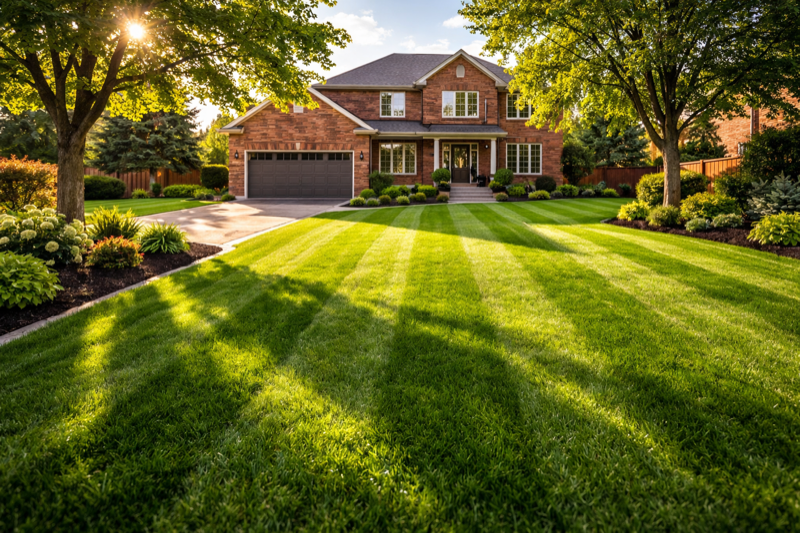
Ontario weather changes what a lawn needs month to month. Here's how the schedule shifts through the year.
As the lawn comes out of dormancy, we handle the first cut, spring cleanup of winter debris, and early fertilizing. It's also a good time to overseed bare patches left from winter before growth ramps up.
Cutting height goes up and frequency shifts to handle heat and dry stretches without stressing the grass. Weed control and spot treatment happen through the growing season as problems show up.
This is when we aerate, overseed, and apply a final fertilizing round to help the lawn store energy for winter. Leaf cleanup and a lower final cut close out the season.
The lawn rests through winter, and we're on hand for snow removal if you need it on the same property. Planning for next season, including any renovation work, starts now while the lawn is dormant.
A few problems come up again and again on Ajax properties. Here's what's usually behind them.
Patchy yellowing in Ajax is often chinch bug damage in dry summers, or grub activity in late summer and fall. Early identification makes treatment far easier. A visit during the growing season can confirm what's happening.
Poor drainage is common in clay-heavy soils across Pickering and parts of Ajax. Core aeration opens up compacted ground and dramatically improves drainage. It's a once-a-year job that makes a visible difference within weeks.
A weed-heavy lawn is usually a lawn under stress. Thin turf from poor ground, shade, or compaction lets weeds move in. Fixing the underlying issue with aeration and overseeding works better long-term than repeated weed treatment.
Scalping happens when the grass is cut too short or the mower blades are dull. We cut at the correct height for the season, longer in summer drought and slightly shorter in spring and fall, which keeps the lawn healthier and more weed-resistant.
A thin layer of thatch is normal. When it exceeds about 1cm it blocks water and nutrients from reaching roots. Dethatching in fall or early spring, followed by aeration, restores a healthy lawn quickly.
Every lawn is different. Send a couple of photos or book a visit and we'll tell you exactly what's happening and what it takes to fix it.
Get a Free QuoteA single grass cutting for an average Ajax lot typically costs $45 to $75, and a full season plan with fertilizing, weed control, and seasonal cleanups usually runs $900 to $1,800 depending on the property. The biggest factor is lot size. A townhome lot in north Ajax takes far less time to cut and edge than a larger detached property in south Ajax, and price scales with that directly. Slope, obstacles like garden beds and trees, and how much edging and trimming the property needs also affect the quote, since a lawn with a lot of fencing and flower beds takes longer to finish properly than an open, square lot. Fertilizing and weed control add to the seasonal total but reduce how much work the lawn needs later, since a well-fed lawn crowds out weeds and needs less remedial treatment. Aeration and overseeding are usually priced as separate add-ons since not every lawn needs them every year. We also factor in how far behind the lawn is when we start, since a property that's been neglected for a season needs more time on the first visit than one that's been maintained consistently, though that cost typically drops once the lawn is back on a regular schedule. The only way to give an exact number is to see the property, since two lots the same size can need very different amounts of work depending on grading, sun exposure, and what's already growing there. Get a free quote and we'll walk the property and give you a real number, not a range.
Most lawns in Ajax need cutting every seven to ten days through the peak growing months of late spring and early summer, when warm temperatures and regular rain push grass to grow fast. That stretches to every ten to fourteen days through the hottest, driest weeks of summer, since grass slows down under heat stress and cutting it too often at that point does more harm than good. Growth picks back up again in early fall as temperatures cool and rain returns, so the schedule tightens back to roughly weekly through September and into October before the season winds down. The right interval also depends on how the lawn is set up. A newly seeded or overseeded lawn needs more frequent, lighter cuts while it's establishing, and a lawn on a steep or shaded lot often grows more slowly than one in full sun and needs less frequent attention. Cutting too infrequently causes its own problems. Letting grass get too long between visits means more clippings come off at once, which can smother the lawn underneath if left in place, and it also stresses the grass more than a regular light trim. We set a schedule based on the specific lawn and adjust it through the season as growth speeds up or slows down, rather than locking every property into the same fixed interval regardless of what's actually happening in the yard that month.
Grass cutting on its own is a standard option, and plenty of homeowners in Ajax book us for exactly that with nothing else added. If all you want is a reliable cut and edge on a set schedule, that's a complete service on its own and doesn't need to be bundled with anything else. A fuller plan makes sense when the lawn has problems that cutting alone won't fix, like thinning turf, visible weeds, bare patches, or compacted ground that's affecting drainage and growth. In those cases, adding fertilizing, weed control, or aeration alongside regular cutting deals with the underlying cause instead of just maintaining the surface. Some homeowners start with cutting only and add services later once they see how the lawn responds, and that's a fine way to approach it if you're not sure yet what the lawn actually needs. Others prefer to book a full season plan up front so the whole year is scheduled and priced at once. Either way, cutting frequency and technique matter on their own. We adjust cutting height by season and keep blades sharp so even a cutting-only lawn stays healthier than one cut carelessly. There's no minimum package and no pressure to add services a property doesn't need. We'll tell you honestly if a lawn would benefit from more than a cut, but the decision is yours. Get a free quote for whichever combination fits your property.
Early fall, from roughly mid-September through October, is the best window to aerate a lawn in Ajax, since cooler temperatures and typically more consistent rain give grass the ideal conditions to recover and fill in before winter. Spring aeration, done in April or May before the heat sets in, is the second-best option and works well for lawns that need attention earlier in the season or missed the fall window. What you want to avoid is aerating during the heat of summer, since pulling cores out of the lawn stresses grass that's already dealing with heat and drought, and the lawn has a harder time recovering before the next stress period hits. Aeration works by pulling small plugs of ground out of the lawn, which relieves compaction and lets air, water, and nutrients reach the roots more easily. It's especially useful on properties with heavy clay-based ground, which holds compaction more than sandier lots and shows it through slow growth and standing water after rain. Pairing aeration with overseeding gets the most out of the timing, since the holes left behind give grass seed direct contact with the ground and a much higher chance of taking root than seed scattered on an unbroken surface. Most lawns benefit from aeration once a year, though a lawn under heavy foot traffic or with persistent drainage problems can sometimes use it twice.
The most effective non-chemical approach is to make the lawn itself too thick and healthy for weeds to get a foothold, since weeds move into thin, stressed turf far more easily than into dense, well-established grass. That starts with cutting at the right height for the season, since longer grass shades the ground and stops weed seeds from getting the sunlight they need to germinate. Regular aeration and overseeding fill in bare and thinning patches before weeds can claim them, which does more long-term good than pulling or spot-treating weeds after they've already established. Hand-pulling works for isolated weeds, especially ones with a single taproot like dandelions, as long as you get the root out and not just the visible top growth. For larger patches, repeated hand removal combined with overseeding the bare spot it leaves behind usually clears it within a season or two. Watering deeply but less often, rather than a light daily sprinkle, also helps grass roots grow deeper and outcompete shallow-rooted weeds. Where a lawn has been weed-heavy for a while, the underlying cause is almost always thin turf from compaction, shade, or poor drainage, so treating that directly gets better long-term results than any surface-level fix. We build weed management into a full lawn care plan through cutting height, aeration, and overseeding rather than relying only on spot treatment, which keeps weeds from coming back the way they do after a one-time fix.
Bare patches usually come from one of a few causes: heavy foot traffic, grub damage, compacted ground that grass can't root into, or shade that's too deep for the grass variety planted there. Foot traffic patches show up along common paths, like the line between a driveway and a side gate, and need overseeding with a grass variety suited to wear once the traffic pattern eases up. Grub damage feels spongy underfoot and the grass pulls up easily in loose patches, usually showing up in late summer or early fall when grub activity peaks. Compacted ground is common on newer builds where heavy equipment worked the property during construction, and it needs aeration before overseeding will actually take, since seed can't root properly into ground that's too dense for water and air to reach it. Shade patches under mature trees need a shade-tolerant grass blend rather than the standard sun mix used on the rest of the lawn, since standard grass simply won't thrive there regardless of how much care it gets. Fixing any of these starts with figuring out which cause is at play, since overseeding a compacted patch without aerating first wastes the seed, and overseeding a shaded patch with the wrong grass blend gives the same disappointing result. We look at the pattern of the bare patches on a visit, which usually tells us the cause, and build a fix around that instead of guessing.
Yes, fertilizing is part of our lawn care plans in Ajax, applied in rounds timed to the grass's growth cycle rather than on fixed calendar dates. A typical program runs three to five applications across the growing season, starting in spring as the lawn comes out of dormancy, continuing through summer with a formulation suited to heat stress, and finishing with a fall application that helps the lawn store energy for winter and green up faster the following spring. Timing matters more than most people expect. Fertilizing too early in a cold spring wastes product since the grass isn't actively growing yet to use it, and fertilizing too late into fall can push new growth that gets damaged by frost. We adjust the schedule to the actual weather that year instead of applying on the same dates regardless of conditions. Fertilizing is priced as part of a season plan alongside cutting, and costs vary with lot size and how many rounds the lawn needs, generally landing between $200 and $450 for a full season on an average property. A well-fertilized lawn also needs less weed treatment over time, since dense, healthy turf crowds out weeds before they can establish, which is why we treat fertilizing as a core part of lawn care rather than an optional extra. Get a free quote and we'll put together a fertilizing schedule that fits your lawn and your budget.
Reach out through the contact form or call (289) 892-2235, and we'll arrange a time to walk the property and put together a quote based on what your lawn actually needs. There's no charge for the quote and no obligation to book anything afterward. Because lot size, ground conditions, existing weeds or bare patches, and how much edging and trimming a property needs all affect the price, we prefer to see a lawn in person rather than quote blind over the phone. That way the number you get is the number you'll actually pay, not an estimate that changes once we see the property. If you already know what you want, whether that's grass cutting only or a full season plan with fertilizing and cleanups included, mention it when you reach out and we'll price exactly that. If you're not sure yet, describe what you're seeing, like patchy grass, weeds, or drainage issues, and we'll recommend what would actually help rather than quoting a generic package. We serve residential properties across Ajax, Pickering, and Scarborough, and quotes are specific to the property and the plan you want, not a flat rate applied to every address. Most homeowners book a first visit shortly after the quote is confirmed, and from there you're on a set schedule for the season. Get a free quote to get started.
Tell us about your property and we'll put together a quote based on what it actually needs. No obligation, no pressure to book anything you don't want.