Most of the properties we work on in Clairlea and Birchcliff are older bungalows and semis with garden footprints smaller than what we see further east, so a good plan matters more than a big budget. We cover design, planting, bed renovation and year-round upkeep across Scarborough.
A landscaping project is more than a single visit. It's a set of decisions about layout, plant choice and how the space will hold up. Here's what that looks like on a Scarborough property.
We walk the property, talk through how you use the space and put together a layout that fits the lot before anything goes in the ground.
Perennials, shrubs and trees selected for the site and put in properly, with the right spacing so the garden fills in the way it's meant to.
Tired beds get reworked rather than replaced when the bones are still good. We keep what's working and rebuild what isn't.
Fresh mulch and clean edging finish a bed off and keep the line between garden and lawn sharp through the season.
Colour planted around the beds you already have, timed so the property looks kept up whichever month you're looking at it.
Old shrubs, dead grass and debris cleared before we start, so the new design goes in on a clean base rather than around old growth.
A lot of homeowners in Guildwood and across Scarborough have hired a landscaper before and had the job stall halfway through. We schedule the work, do it properly, and finish what we start.
Everything that goes into a landscaping project on a Scarborough property, from the first walk-through to what the garden needs once it's in.
Get a Free QuoteLandscaping covers everything from a single reworked garden bed to a full front and back yard design. Every project starts the same way: we look at the property, ask what you want out of the space, and work out a plan before anything is dug up or planted. That plan covers layout, plant selection and how the finished garden will be looked after once we've left.
We don't plant on the spot without a plan. Design comes first, working out sightlines, sun and shade, and what the space needs to do, whether that's screening a fence line or giving you somewhere to sit. Once the layout is agreed, we source the plants and install them ourselves, so the garden that goes in matches what was designed.
Housing across most of Scarborough is dense, older bungalows and semis with smaller garden footprints than we see further east, which means every square foot of a bed has to earn its place. Properties nearer the Bluffs sit on sandy, erosion-prone ground on sloped lots, which changes what we plant and how we anchor a bed. Scarborough Village and Guildwood tend to have established perennial gardens from the original build that we can often work with rather than tear out.
We arrive with the plants, materials and tools for the day's work already sorted, so there's no back and forth to a supplier mid-project. Beds, edging and hardscaping elements go in over the agreed timeline, and we walk you through the finished garden before we consider the job done.
Spring and fall are the strongest windows for planting, since the ground is workable and plants aren't under summer heat stress while they establish. Hardscaping and bed prep can happen any time the ground isn't frozen. We'll talk through timing specific to your project when we quote it.
We work within any budget. A small bed renovation and a full yard redesign are both real projects, and the plan changes to fit what you want to spend rather than the other way around. We walk the property, talk through scope, and give you a number before any work starts.
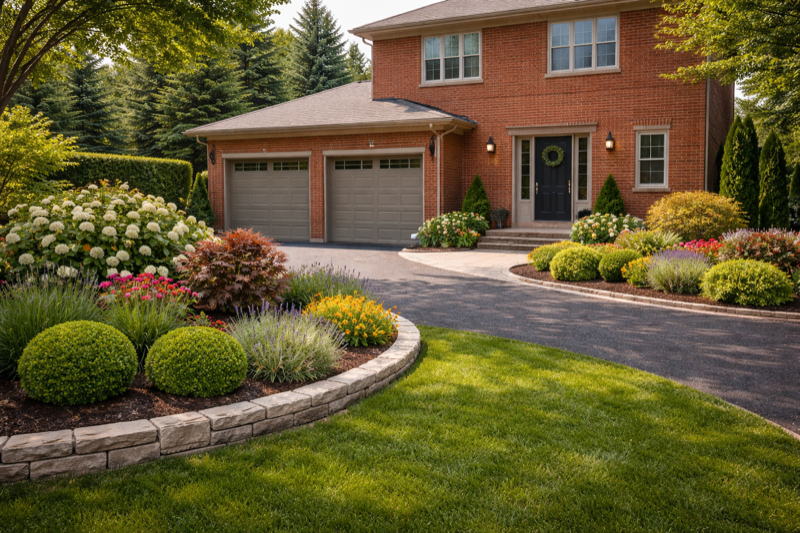
Ontario's seasons shape when different parts of a landscaping project make sense. Here's how we time the work across the year.
The strongest planting window. Beds get cleared, edged and planted while the ground is workable and before summer heat sets in.
Established plantings get watered and maintained, and new installations get monitored closely as they settle in through the heat.
A second strong planting window in Scarborough. Cooler air and warm ground help perennials and shrubs root before winter.
Design and planning happen through the colder months, so a project is ready to go the moment the ground opens back up.
A few problems come up again and again after a landscaping project. Here's what causes them and what we do about it.
New plants need consistent watering through the first season, especially in Scarborough's summer dry spells. Most establishment failures are watering issues, not planting issues. We advise on watering schedules for every installation.
New beds are most vulnerable in the first season before plants fill in. A layer of fresh mulch at 5 to 7cm depth significantly reduces weed pressure while the garden establishes.
Clay ground in parts of Pickering and Ajax holds water around roots and causes plant stress. Raised beds, amended beds and plant selection suited to clay conditions solve this at the design stage.
A landscaping installation is the start, not the finish. Without ongoing maintenance, even a well-designed garden loses its shape quickly. We offer maintenance plans that start the season after installation.
The gap between expectation and result usually comes from unclear briefing at the start. We discuss what you want the garden to feel like, not just what plants you want, before we begin any work.
Tell us what you're seeing and we'll walk the property and give you a straight answer, along with a free quote if there's work to do.
Call (289) 892-2235Landscaping in Scarborough typically runs from around $3,500 for a single garden bed renovation to $20,000 or more for a full front and back yard redesign with planting, edging and hardscaping. The range depends on a few things. Size of the property matters first: a Birchcliff bungalow lot with a modest front bed costs far less to redesign than a larger property with multiple garden zones. Scope is the second factor. A planting-only project, where we work with beds and hardscaping you already have, costs less than a full design that includes new edging, retaining structures or major regrading. Plant selection changes the number too. Mature shrubs and specimen trees cost more than perennials and groundcover, and a garden built mostly around perennials will always come in below one built around larger woody plants. Access also plays a part. If we can bring materials in easily from the driveway or side yard, the job goes faster and costs less than a property where everything has to be carried through a narrow gate. We walk every property before quoting so the number reflects what your yard actually needs, not a generic estimate. There's no cost to that visit and no obligation once we've given you the number. If you want a figure specific to your property, get in touch for a free quote and we'll come take a look.
Landscaping is the design and installation work. It's what happens once, when a garden is planned, beds are laid out and plants go in the ground for the first time. Garden maintenance is the ongoing seasonal care that keeps that garden looking the way it did the day it was finished. Most homeowners think of these as one thing, but they're really two separate jobs with different timing. A landscaping project might take a few days or a couple of weeks, depending on scope, and it's usually a one-time event unless you're expanding or reworking part of the property later. Garden maintenance is recurring, spring through fall, covering pruning, weeding, mulching top-ups and general upkeep so the beds we installed don't start looking overgrown by midsummer. We do both, and a lot of the properties we landscape move straight onto a maintenance visit schedule once the installation is finished, because a new garden needs more attention in its first year than an established one does. If you're only after upkeep on a garden you already have, that's a maintenance conversation, not a landscaping one, and we'll tell you which service actually fits what you're asking for rather than quoting the wrong job. Either way, get in touch and we'll work out which one applies to your property.
We do both, and we don't separate the two into different visits with different people. Design comes first: we walk the property, talk through how you actually use the space, and work out layout, plant choice and how the garden should look through the different seasons, not just the day it's planted. That plan accounts for sun and shade, drainage, sightlines from the house, and what's already growing well that's worth keeping. Once you're happy with the plan, we source the plants and materials and install everything ourselves, so there's no gap between what was designed and what actually goes into the ground. A lot of homeowners have been through a version of this where a designer draws something up and a separate installer executes it loosely, and the finished garden ends up looking nothing like the plan. We avoid that by keeping design and installation under the same visit and the same people, so decisions made on paper carry through to what's planted. For smaller projects, like a single bed renovation, the design step is quicker and more informal, closer to a conversation on site than a drawn plan. For larger projects covering a full yard, we'll walk you through the layout before anything is dug. Either way, you'll know what the finished garden is meant to look like before we start any digging.
A single garden bed renovation is usually finished in a day or two, while a full front and back yard redesign typically takes one to three weeks depending on scope. A few things affect where a project falls in that range. The size of the area being worked matters most obviously, but scope matters just as much: a planting-only project moves faster than one that includes new edging, regrading or retaining structures, since earthwork and hardscaping take longer than planting alone. Plant availability plays a role too. Common perennials and shrubs are usually ready to go, but if a design calls for a specific specimen tree or an unusual variety, sourcing it can add time before planting even starts. Weather affects timing as well. Heavy rain can push back digging and planting by a day or two here and there, and we won't plant into ground that's too wet to work properly, since it damages the root structure and stresses the plant. We give you a realistic timeline when we quote the project, based on what your specific yard needs, rather than a generic estimate that doesn't hold up once we're on site. If timing matters for a particular date, tell us when you get your quote and we'll work out whether it's achievable.
Spring and fall are the strongest windows for planting, though design, planning and hardscaping work can happen any time the ground isn't frozen. In spring, the ground is workable and plants get a full growing season ahead of them before summer heat sets in, which gives new perennials and shrubs the best possible start. Fall is just as strong, sometimes stronger, because cooler air combined with ground that's still warm from summer encourages root growth without putting stress on the plant above ground. Summer planting is possible but riskier, since new plants have to establish while dealing with heat and higher water demand at the same time, which means more attention and more watering in the first few weeks. Winter is really the planning season. Ground is frozen or too wet to work, so it's the right time to design the project, choose plants and lock in a schedule so the work can start the moment the ground opens up again in spring. If you're planning a project and aren't sure when to start, the honest answer depends on scope: planting-heavy projects should aim for spring or fall, while a project that's mostly hardscaping or bed prep has more flexibility. We'll tell you the right timing for your specific project when we quote it.
Yes, planting is part of every landscaping project we take on, not a separate add-on. Once a design is agreed, we source the plants ourselves and put them in the ground, so the same people responsible for the plan are responsible for how it's executed. That matters more than it sounds like it should. A design on paper doesn't account for exactly how a shrub sits against a fence line or how much room a perennial actually needs once it's mature, and those are judgment calls made on site, at the point of planting, not on a drawing. We select plants suited to the specific conditions of your property, sun exposure, drainage, and how sheltered or exposed the spot is, rather than working from a generic plant list. That's especially relevant on properties near the Bluffs, where sandy, erosion-prone ground on sloped lots calls for different plant choices than a flat lot further inland. We plant at the right spacing so beds fill in properly over their first couple of seasons instead of looking sparse or, at the other extreme, overcrowded within a year. If your project is planting-only, working with beds and hardscaping you already have, that's a straightforward job we take on regularly, and it's usually quicker and less expensive than a full redesign. Get in touch and we'll scope exactly what your project needs.
In most cases we work with what's already there rather than clearing everything out. A lot of Scarborough properties, particularly in Scarborough Village and Guildwood, have established perennial gardens from the original build, and mature plants like that take years to reach the size they're at, so tearing them out to start fresh is usually the wrong call. We assess what's healthy and worth keeping, what's struggling and worth replacing, and what's simply in the wrong spot and could be moved rather than discarded. From there, the project becomes a mix of renovation and new planting, which is often faster and less expensive than a full start-from-scratch redesign, since we're not paying to remove and replace things that were already doing their job. There are cases where starting over does make sense, usually when the existing layout doesn't work for how you actually use the space, when the drainage under an old bed has caused ongoing problems, or when what's there is mostly overgrown, diseased or past saving. We'll tell you honestly which situation your garden is in rather than defaulting to a full teardown, because a bigger project isn't automatically the better outcome for you. Either way, the plan gets built around your specific yard, not a standard template.
Call, email or fill out the contact form, and we'll set up a time to walk your property and give you a number. There's no cost to that visit and no obligation once we've given you the quote. When we walk the property, we're looking at size, existing plantings, sun and shade, access for materials and what condition the current beds or lawn are in, since all of that affects both scope and price. Bring whatever you have in mind, whether that's a rough idea, a photo of a garden style you like, or a specific problem you want solved, and we'll talk through what's realistic for the space and the budget. You don't need a firm plan going in. Plenty of homeowners start the conversation not knowing exactly what they want, and we help narrow that down during the walk-through rather than expecting you to arrive with a finished brief. Once we've seen the property, we'll put together a quote that reflects what your specific yard needs, not a generic estimate based on square footage alone. If you want to move ahead, we'll talk through timing based on the season and the scope of work. If you're not ready yet, that's fine too. There's no pressure attached to getting a number. Reach out through the contact page or call (289) 892-2235 to get started.
Tell us what you're picturing and we'll walk the property, talk through what it needs and give you a free, no-obligation quote.